
Tuesday, February 10, 2026
4:00pm - 5:30pm
Labor Education Center, Room 115
Co-Sponsored by SMLR’s Center for Global Work and Employment
and Rutgers Center for Chinese Studies
Virtual option available
Click here to participate via Zoom
For more information, please contact Lei Lei (llei@sociology.rutgers.edu)
Abstract
Social drinking and/or eating is both a common human behavior and a verified network generator from a variety of social network research around the world. Yet, its causal consequences are not well-established empirical evidence. To fill in this gap, the present study is designed to examine the causal effect of social drinking/eating networks (SDENs) on measures of generalized and institutional trust. Ongoing analysis of data from the 2017 module of the International Social Survey Programme (ISSP) shows that there is a great variation in both measures of trust and an individual’s frequency of attendance to SDEN occasions across the 30 ISSP member countries/regions in Americas, Asia, and Europe. OLS models reveal that a citizen’s SDEN frequency is associated positively with one’s trust in anyone in society at large but negatively with one’s trust in the national court and major corporations of one’s own country/region. These results survive a causality test using Instrumental Variable Models, which also show that the causal effects of SDENs on forms of trust vary across societies in terms of political regime, economic development, and cultural orientation, as well as in terms of individuals’ gender, education, and work sector.
About Our Speaker
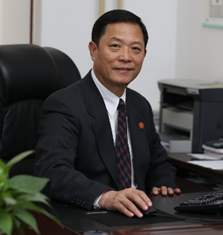 Dr. Yanjie Bian is a distinguished professor of humanities and social science and director of the Institute for Empirical Social Sciences, Xi’an Jiaotong University. He is a professor emeritus of sociology at University of Minnesota and formerly taught at Hong Kong University of Science and Technology. He has published extensively in the areas of social networks and social capital, social stratification and mobility, and contemporary China. He co-founded the Chinese General Social Survey (with Professor Lulu Li) and is currently doing research on the sociology of guanxi and ethnic relations in China. His most recent books include Guanxi: How China Works (Polity, 2019) and On Guanxi and Guanxi Networks (Chinese Social Science Academic Press, 2023, in Chinese).