


U.S.-China rivalry has increasingly jeopardized the rights and interests of transnational actors whose lives span the two countries. Few are more exposed than the Chinese diaspora in the United States, which has faced heightened discrimination, regulatory scrutiny, and other government actions justified on national security grounds. How do members of the diaspora mobilize law to defend themselves, why have Chinese immigrant lawyers emerged as the principal organizers, and how does their litigation shape the implementation of policies targeting China and people of Chinese origin? Drawing on interviews, digital ethnography, two original surveys, and judicial archives, this article traces diaspora legal mobilization from the successful 2020 challenge to the executive order banning WeChat to its institutionalization in the Chinese American Legal Defense Alliance, which has since contested the China Initiative, state alien land laws, and the termination of Chinese students’ visa status. Litigation, the article argues, transformed dispersed grievances into sustained collective action and generated the organizational capacity, legal consciousness, and institutional infrastructure for successive rounds of mobilization, making the courtroom an overlooked arena of contemporary U.S.-China relations.
Wed, 10/14/2026, 12:00pm - 1:30pm


Most European labor markets are structured by industry-wide wage bargaining. We study the relationship between sectoral bargaining and wage inequality by differentiating between wage coordination (i.e., inequality in wage floors) and wage centralization (i.e., inequality in deviations from wage floors). We introduce a novel data set of over 30,000 major German sectoral bargaining agreements between 1950 and 2025 which lets us reconstruct wage coordination for the history of the Federal Republic of Germany. We find that inequality in bargained wage floors declined substantially between 1960 and 2025. This is driven by white collar contracts and the service industry and mainly occurs within-contract. Contracts also become less regionally and demographically differentiated over time. These findings contrast with rising wage inequality during our later study period and show that wage inequality in Germany has not been driven by bargaining fragmentation, but by decentralization.
Fri, 04/10/2026, 12:00pm


Social drinking and/or eating is both a common human behavior and a verified network generator from a variety of social network research around the world. Yet, its causal consequences are not well-established empirical evidence. To fill in this gap, the present study is designed to examine the causal effect of social drinking/eating networks (SDENs) on measures of generalized and institutional trust. Ongoing analysis of data from the 2017 module of the International Social Survey Programme (ISSP) shows that there is a great variation in both measures of trust and an individual’s frequency of attendance to SDEN occasions across the 30 ISSP member countries/regions in Americas, Asia, and Europe.
Tue, 02/10/2026, 4:00pm - 5:30pm


While it is well-known that spillovers occur between workplaces and civic society, examinations are largely limited to employee voice effects on distal acts like voting. Spillovers between broader employment experiences and socio-politically extreme belief formation are less developed. We theorize that positive employment experiences reduce individual-level socio-politically extreme beliefs through control loss mitigation, anxiety reductions, and exposure to new perspectives. We also propose heterogeneous job empowerment effects.
Wed, 11/05/2025, 12:00pm - 1:30pm


We study the role of union heterogeneity in shaping wages and inequality among unionized workers. Using linked employer-employee data from Brazil and job moves across multi-firm unions, we estimate over 4,800 union-specific pay premia. Unions explain 3–4% of earnings variation. While unions raise wages on average, the standard deviation in union effects is large (6-7%). Validating our approach, wages fall in markets with higher vs. lower union premia following a nationwide right-to-work law. Linking premia to detailed data on union attributes, we find that unions with strike activity, collective bargaining agreements, internal competition, and skilled leaders secure higher wages. High-premium unions compress wage gaps by education while the average union exacerbates them. Post right-to-work, however, worker support for high-premium unions falls when between-group bargaining differentials are large. Our findings show that unions are not a monolith—their structure and actions shape their wage effects and, consequently, worker support.
Fri, 10/31/2025, 12:00pm - 2:00pm


The paper deals with the regulatory gaps that resulted in devastating and scandalizing wages and working conditions in the German meat industry for more than two decades.
Wed, 10/01/2025, 12:00pm – 1:30pm


This talk introduces an important theory in evolutionary biology: the r/K strategy theory.
Thu, 09/25/2025, 4:00pm - 05:30pm


Organizations increasingly use algorithms to determine who gets hired, how workers are evaluated, and even who gets fired. To examine the implications of organizations’ use of algorithms in the labor process, I conducted a longitudinal study of one the largest digital labor platforms for high-skilled work. I found workers were confronted with and responded to the algorithms controlling them in ways that existing theory does not adequately account for. First, new workers engaged in practices which inadvertently contributed to suboptimal wages and inefficient job matching when then they encountered the “cold start” problem: the algorithm struggled to recommend new workers to jobs primarily because they had no prior rating history. Second, for experienced workers who obtain a rating evaluation, the platform's algorithms create what I call "reputational interdependence": the platform's algorithms share workers' rating scores within and across other digital platforms and organizations, without workers' consent or control. Together, I theorize how algorithms enable platforms to control high-skilled workers within an “invisible cage”: an environment in which organizations embed the rules and guidelines for how workers should behave in opaque algorithms that shift without providing notice, explanation, or recourse for workers. It is ‘invisible’ because organizations can use algorithms to change the rules and criteria for success at an unprecedented speed and scale without notice or explanation. It is a ‘cage’ because these algorithms increasingly control our opportunities without our say.
Thu, 09/18/2025, 11:30am - 1:30pm
The Center for Global Work and Employment (CGWE), Rutgers Global, and the TUP Academy (based in New Jersey, U.S.) partnered to launch TUP@Rutgers, an innovative non-degree, pre-college preparatory program for highly qualified international students.
Mon, 09/01/2025 - 14:00
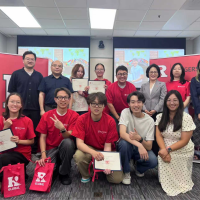

The Center for Global Work and Employment (CGWE), in partnership with Rutgers Global, hosted the 5th Summer Camp, Frontiers of Labor and Human Resources Management, at Rutgers’ New Brunswick campus from July 28 to August 19, 2025. Nine students from Renmin University of China, Macau University of Science and Technology, and Korea University participated in the program.
Mon, 07/28/2025 - Tue, 08/19/2025
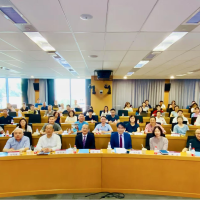

CGWE co-organized the Global Labor Governance Forum: Knowledge, Institutions, and Practices for Sustainable Globalization with Renmin University’s School of Labor and Human Resources and the Beijing Office of the International Labour Organization (ILO). The forum took place in Beijing, China, on July 12, 2025, and drew more than 50 researchers and practitioners from the U.S., the U.K., China, and the ILO.
Sat, 07/12/2025